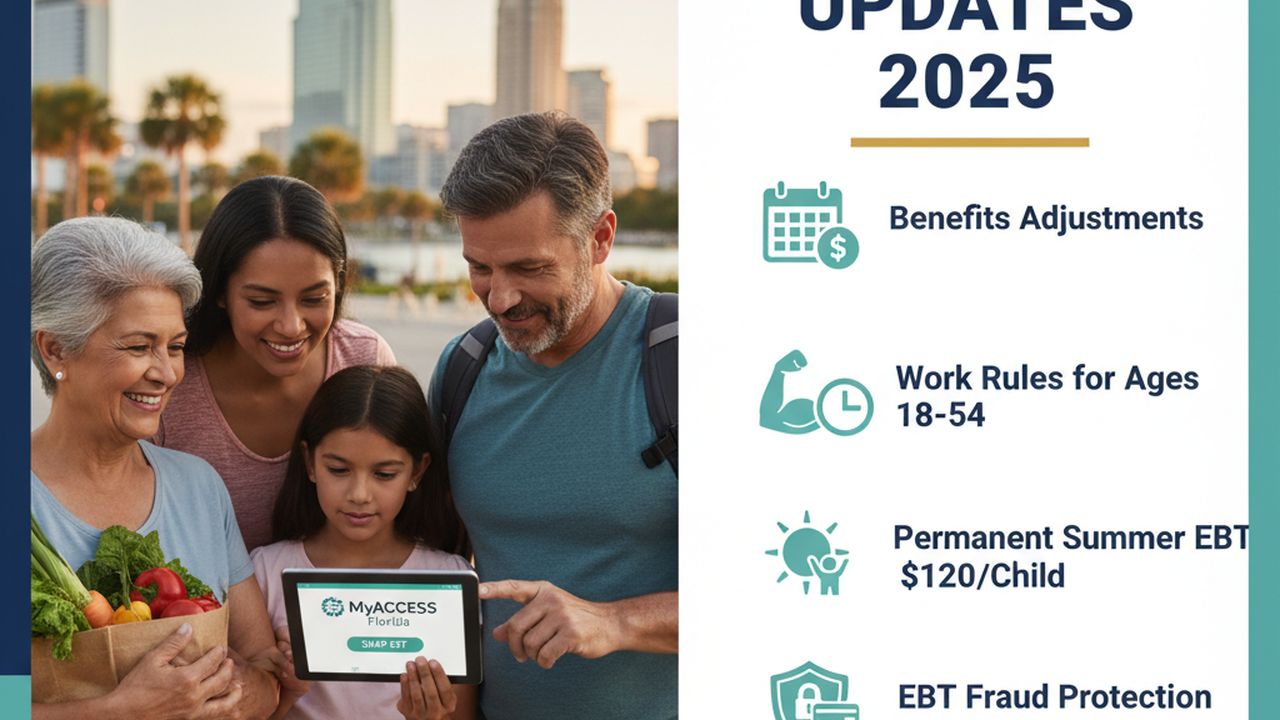
If you’re a senior, a caregiver, or a family in the Tampa Bay area trying to stretch grocery dollars, a few important SNAP/EBT updates affect how much you can receive, who qualifies, and how to protect your benefits. Below is a practical, Florida-focused guide to the most meaningful changes, what they mean for you, and exact steps to apply, stay eligible, and get local help. Where possible, we link directly to trusted sources so you can double‑check details and take action right away.
The Big Picture: Why This Matters Now
- Annual SNAP updates went into effect on October 1 as part of USDA’s normal “new fiscal year” refresh. This can change the maximum monthly SNAP allotment and certain deductions. USDA announces these changes publicly each year; see the latest on USDA Food and Nutrition Service (FNS).
- Work rules for certain adults without children were tightened by Congress, with age-based expansion finalized in late 2024. USDA details the phased-in age changes for “Able-Bodied Adults Without Dependents” (ABAWDs) on its ABAWD policy page.
- The permanent Summer EBT program launched nationally at $120 per eligible child. USDA’s official page explains how states and tribes participate and what families can expect; see USDA’s Summer EBT overview.
- Online grocery purchasing with EBT is here to stay and continues to expand, making it easier to shop without transportation barriers. USDA maintains a current list of Participating Retailers and States for online EBT.
Below we translate these national changes into concrete steps for Florida households and point you toward Tampa Bay resources if you need one‑on‑one enrollment help.
What Changed for SNAP in 2025—and How It Affects You
1) Annual SNAP benefit updates took effect October 1
Every October, SNAP adjusts maximum benefit amounts and income/expense standards. These are federal updates; Florida applies them automatically. While the exact dollar amounts can shift slightly each year, the important takeaway is that your benefit calculation may look different starting with your October issuance.
- Where to see current figures: The authoritative place to check the latest maximum allotments and deductions is the USDA FNS SNAP page and Florida’s SNAP page through the Department of Children and Families (DCF) MyACCESS Florida. Florida also posts income eligibility and benefit information on its main Food Assistance (SNAP) page.
Action if your benefits changed:
- Watch for your October determination/notice in your MyACCESS account or mail.
- If your household got a cost-of-living increase to Social Security or SSI, DCF will factor that in. If your benefit looks off, request a case review through MyACCESS or call DCF at 850‑300‑4323.
- Seniors and people with disabilities: Make sure you’re getting the medical expense deduction if your unreimbursed medical costs are above the threshold. This can increase your monthly benefit. See USDA’s deduction guidance on the SNAP eligibility page.
2) Work rules tightened for some childless adults ages up to 54
Under federal law, certain “Able-Bodied Adults Without Dependents” (ABAWDs) must meet work requirements to receive SNAP beyond a three-month time limit in a 36‑month period. Congress raised the upper age for this requirement to 54 as of October 2024. USDA explains the phased-in age changes and the exemptions (veterans, people experiencing homelessness, and former foster youth through age 24 are exempt) on its ABAWD policy page.
What this means in Florida:
- If you are 18–54, don’t live with a minor child, and are not exempt, you generally need to work, participate in a qualifying employment/training program, or volunteer at least 80 hours per month to keep getting SNAP beyond three countable months.
- Exemptions matter. You may be exempt if you have a verified disability, are pregnant, are homeless, are a veteran, are a former foster youth (up to age 24), or have a doctor’s note showing you are temporarily or permanently unable to work. Ask DCF to review your case if you think an exemption applies.
- Learn more and ask DCF to screen you for exemptions through MyACCESS Florida or by calling 850‑300‑4323. For the federal rule details, see USDA’s ABAWD FAQ.
3) Summer EBT is now permanent at $120 per eligible child
USDA launched the permanent Summer EBT program to help families cover food costs when school is out. Eligible students generally receive $120 in Summer EBT benefits for the summer months. Details, including which states and tribes elected to operate the program, are on USDA’s Summer EBT page.
Key points:
- Children typically qualify through participation in National School Lunch/School Breakfast, or via direct certification (e.g., SNAP, TANF).
- Check with your child’s school district food service office in spring to confirm if your district participates and whether you need to return any forms. If Florida or your district is not participating, ask about local summer meal sites.
Find summer meals near you:
- USDA’s Summer Meal Site Finder maps free kids’ meal locations during summer.
4) EBT fraud protections and card security are stronger—but you still need to act
Skimming and cloning have targeted SNAP households across the country. USDA provides guidance on what skimming is and how to protect your benefits on its SNAP Fraud/Skimming page. Many states, including Florida, have implemented additional protections and replacement processes for stolen benefits.
What to do in Florida if you suspect theft:
- Immediately change your PIN and report the theft. Florida DCF posts instructions and the EBT Customer Service number (1‑888‑356‑3281) on its Florida EBT page.
- Ask DCF about current reimbursement policies for benefits stolen due to skimming, cloning, or phishing. Federal rules authorized reimbursements for certain thefts; check DCF’s latest guidance for dates and documentation needed.
- Use these safeguards:
- Change your PIN often and avoid repeating number patterns.
- Cover the keypad and pull on card readers at ATMs/checkout; if the reader seems loose, don’t use it.
- Do not share your EBT number or PIN by phone, text, or social media. Government agencies will not call to ask for your PIN.
- Consider splitting shopping trips to reduce the balance remaining on your card.
5) EBT online grocery buying continues to expand
Florida households can use SNAP EBT to shop online with participating retailers. This helps seniors, people with disabilities, and working families who face transportation or mobility challenges. USDA keeps an updated list of participating states and retailers on the Online Purchasing page.
What to know:
- You can use EBT for eligible food items, but delivery fees, tips, and non-food items must be paid with another form of payment.
- Retailers often mark SNAP‑eligible items online. Always review the final cart to ensure fees are not being charged to EBT.
Eligibility Basics for Florida Households
Even with the annual updates, the core rules stay consistent:
- Income tests: Most households must meet a gross income test (around 130% of the federal poverty level) and a net income test after allowable deductions. Elderly (60+) and disabled households may be subject to the net income test only. USDA explains this on the SNAP eligibility page.
- Deductions that can boost your benefit: excess shelter costs, standard utility allowance, child support payments, and out‑of‑pocket medical expenses for seniors or people with disabilities. See USDA’s overview of deductions under SNAP eligibility.
- Resources: Many Florida households do not have to meet a resource limit, but there are exceptions. Review Florida’s specifics via MyACCESS Florida and USDA’s eligibility guide.
Tip: If your rent, utilities, or medical costs have gone up, report them. These changes can increase your SNAP amount.
How to Apply, Recertify, or Report Changes in Florida
- Apply online: Use MyACCESS Florida. You can apply for SNAP, Medicaid, and cash assistance in one application.
- By phone: Call Florida DCF at 850‑300‑4323 (TTY 1‑800‑955‑8771).
- Upload documents: Proof of identity, income, rent/lease, utilities, and medical bills (if elderly/disabled) will speed up processing.
- Recertify on time: Your notice will list your recertification due date. Recertify through MyACCESS or by mail to avoid a gap.
- Check your EBT balance or replace a card: Call Florida EBT Customer Service at 1‑888‑356‑3281 or visit Florida EBT.
Cost-Saving Add-Ons That Pair Well With SNAP
SNAP is a foundation, but most Tampa Bay households need a stack of supports to get through a tight month. These programs can lighten the load:
- Free or low-cost cell service: The FCC’s Lifeline program offers up to $9.25/month off phone or internet service (up to $34.25 on Tribal lands). Learn more and apply via the FCC Lifeline program. Many carriers in Florida participate.
- Internet discounts: The Affordable Connectivity Program (ACP) stopped accepting new enrollments and wound down in 2024 due to lack of funding. If you lost ACP, ask your provider about a low‑income plan and apply for Lifeline.
- Utility assistance (LIHEAP): Florida’s LIHEAP helps with electric bills and crisis situations. Start with Florida’s LIHEAP information through the state’s program portal and your local agency; see the U.S. Department of Health & Human Services LIHEAP site and then search your county provider. A good starting point is Florida’s “low income home energy assistance” page via your county or utility; for general federal guidance, see HHS LIHEAP.
- Women, Infants, and Children (WIC): WIC provides specific foods and nutrition support for pregnant/postpartum individuals, infants, and children under 5. Florida families can learn more and apply through the Florida WIC Program.
- Free summer and afterschool meals for kids: Find sites using USDA’s Meals for Kids Finder.
Local food access in Tampa Bay:
- Feeding Tampa Bay runs pantries, mobile distributions, and benefits assistance. Check schedules and locations on Feeding Tampa Bay.
- Tampa Bay Network to End Hunger supports community meal programs and navigation; see TBNEH.
- 211 Tampa Bay Cares can connect you to food, housing, and utility programs 24/7—dial 211 or visit 211 Tampa Bay Cares.
Disaster and Emergency SNAP Updates
Florida sometimes receives short‑term SNAP flexibilities after hurricanes and other disasters, such as:
- Hot Foods Waivers (allowing you to buy hot prepared foods with EBT for a limited time).
- D‑SNAP (Disaster SNAP) for households in impacted counties.
FNS updates these waivers and declarations in real time at its Disaster Assistance page. If a storm hits:
- Check USDA’s Disaster page first for statewide announcements.
- Watch Florida DCF’s Newsroom and your county’s emergency management site.
- If Hot Foods is approved, you’ll be able to buy hot prepared items temporarily with EBT; stores will post signs.
Practical Tips to Maximize Your SNAP
- Report expenses fully: Rent, utilities, child support, dependent care, and out‑of‑pocket medical costs for seniors/people with disabilities can raise your benefit. Keep receipts and submit updates via MyACCESS.
- Align shopping with discounts:
- Use Double Up programs or retailer-specific produce discounts when available; check with your local farmers markets and grocers.
- Compare store pickup (often lower fees) against delivery (not EBT-eligible for fees) to limit out-of-pocket costs.
- Plan for reissuance delays: Keep a small nonperishable reserve in case of EBT card issues or disaster disruptions.
- Protect your card:
- Change your PIN regularly and especially after any unusual activity.
- Avoid ATM or POS terminals that look tampered with. USDA’s skimming guide explains what to look for: USDA SNAP on EBT Skimming.
How Healing Tampa Bay Can Help You Right Now
Our outreach team helps Florida residents enroll in SNAP, Medicaid/Medicare Savings Programs, Marketplace plans, and related supports. We can:
- Screen you for SNAP and other benefits in one session.
- Help submit your application and upload documents via MyACCESS.
- Explain ABAWD rules and request exemptions if you qualify.
- Connect you with local food pantries, senior food boxes, and meal delivery options.
- Troubleshoot EBT issues, fraud reports, and recertifications.
If you’re unsure where to start, bring a recent piece of mail, ID, and any income or expense documents you have. We’ll help you build a plan.
Quick Links You’ll Actually Use
- Apply/Manage SNAP in Florida: MyACCESS Florida
- Florida EBT card info/replacement: Florida EBT or call 1‑888‑356‑3281
- SNAP eligibility rules and deductions: USDA SNAP Eligibility
- ABAWD rules (ages, exemptions, and hours): USDA ABAWD Overview
- EBT online purchasing: USDA Online Purchasing Pilot
- Summer EBT program: USDA Summer EBT
- Report suspected EBT skimming/fraud guidance: USDA SNAP EBT Skimming
- Tampa Bay food assistance: Feeding Tampa Bay and 211 Tampa Bay Cares
- Lifeline phone/internet discount: FCC Lifeline
Our Take: What To Do Before Your Next Grocery Run
- Log into MyACCESS and confirm your case details are current—especially rent, utilities, and medical expenses if anyone is 60+ or has a disability.
- If you’re 18–54 without kids in the home, ask DCF to screen you for ABAWD exemptions. If you need hours, request a referral to an approved work or training program now to avoid a cutoff.
- If you have school-aged kids, put a reminder in your calendar for spring to check whether your district participates in Summer EBT and to locate summer meal sites.
- Change your EBT PIN this week and review your recent transactions. If something looks wrong, call 1‑888‑356‑3281 immediately and document the call.
- If you’re behind on utilities or phone, apply for LIHEAP and Lifeline to free up cash for food. Start with FCC Lifeline and your county LIHEAP provider.
SNAP and EBT continue to evolve, but there’s real help available in Tampa Bay. If you want one-on-one assistance, our team will walk you through every step—from eligibility screening to a successful application and beyond.