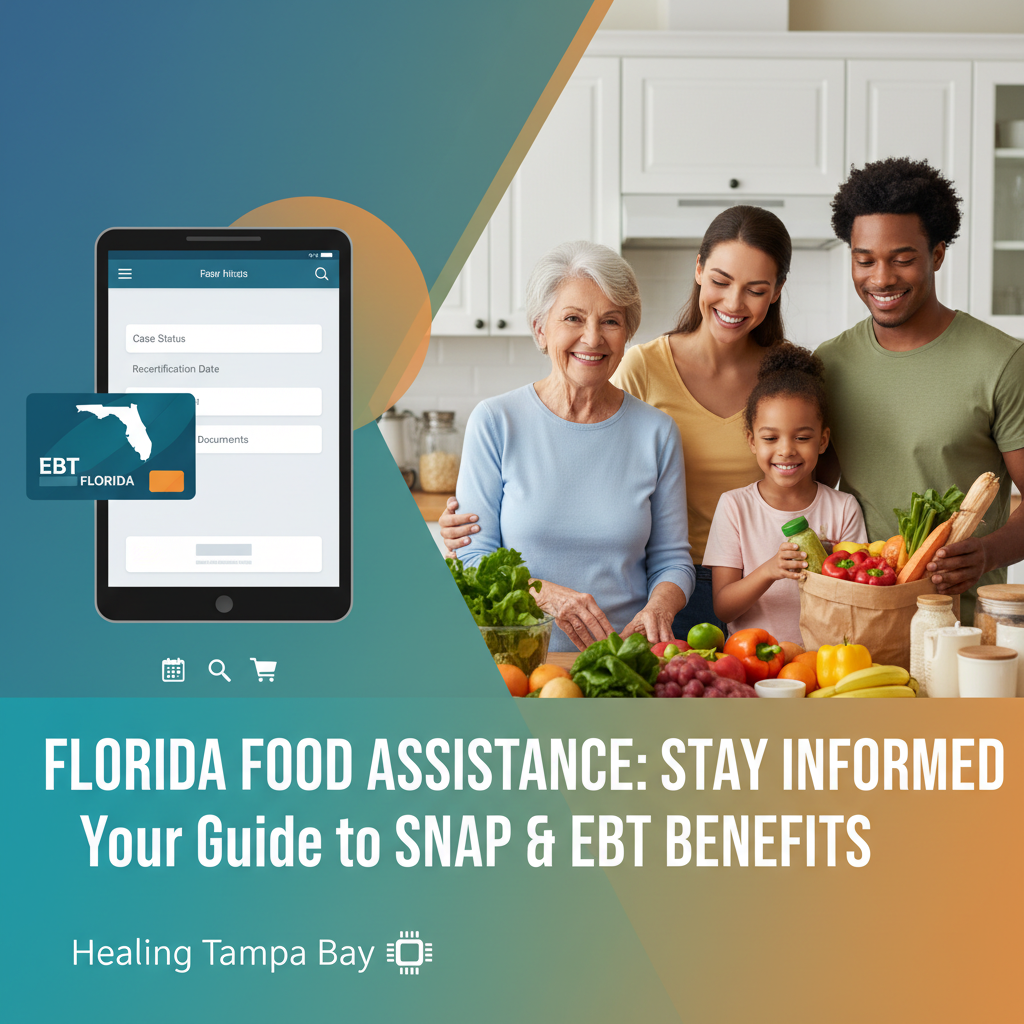
If you rely on SNAP (food stamps) or EBT in Florida, the steady drumbeat of policy updates can feel overwhelming—especially for seniors, caregivers, and families juggling bills. From our vantage point at Healing Tampa Bay, the most important takeaway right now is this: don’t wait for rumors. Actively verify what’s changed for your household, recertify on time, and use every cost-saving tool available.
Below is a practical, Florida-focused guide to help you stay enrolled, maximize your monthly food budget, and connect to other local supports. We combine hands-on enrollment experience with a disciplined, source-driven approach, and we use AI monitoring to track policy updates across official channels so you don’t have to.
Note: For the latest official program rules, we always recommend checking the U.S. Department of Agriculture’s SNAP pages and the State of Florida’s websites: see USDA’s SNAP hub, USA.gov’s overview, and Florida’s ACCESS Florida portal and Food Assistance page.
What “recent news” really means for you
SNAP and EBT updates can include things like changes in how recertifications are handled, adjustments to minimum/maximum allotments and deductions, retailer rules for online grocery purchases, or state participation in federal pilots. Rather than chase headlines, anchor yourself to three actions that matter most to your benefits:
- Confirm your next deadline in your online account and update your contact information.
- Recertify and report changes promptly; include every allowable deduction.
- Use approved ways to stretch benefits (double-up programs, online purchasing, and community nutrition supports).
You can always verify federal-level rules through USDA SNAP, and Florida program operations through ACCESS Florida and DCF’s food assistance page.
Step-by-step: How to protect and maximize your SNAP in Florida
1) Log in and lock down your account details
- Use ACCESS Florida to:
- Check your case status and next recertification date.
- Verify your mailing address, phone, and email so you don’t miss notices.
- Upload requested documents (proof of identity, residency, income, medical expenses, shelter costs).
Pro tip: Set calendar alerts 10–15 days before key dates (interviews, document due dates, recert). Late responses are one of the most common reasons benefits lapse.
2) Recertify on time—and include every allowable deduction
SNAP eligibility factors include household size, income, certain expenses, and immigration status. Each state follows federal rules with state-specific processes. For a plain-language federal overview, see USDA’s SNAP eligibility page and USA.gov’s food stamps guide.
When recertifying:
- Report total household income (earned and certain unearned).
- List dependent care costs, child support paid, and allowable shelter/utility costs as directed.
- For seniors and people with disabilities: include out-of-pocket medical costs above allowable thresholds if you’re eligible for the medical deduction. This can substantially increase your SNAP if you qualify under those rules.
- Keep copies of everything you submit.
If you’re unsure what counts toward deductions, contact us at Healing Tampa Bay or check Florida’s current guidance via DCF’s food assistance page.
3) Use your EBT card strategically: online purchasing, balance checks, and fraud safeguards
- Online purchasing: Many Florida households can buy groceries online from approved retailers using SNAP EBT where available. Learn the rules and which stores participate through USDA’s SNAP Online Purchasing page.
- Retailer locator: Find authorized stores near you with USDA’s Retailer Locator.
- Check your balance and transactions: Use EBT Edge (website or mobile app) to monitor your account, set alerts if available, and catch any suspicious activity quickly.
Security tips:
- Never share your EBT PIN. Change it if you suspect someone saw it.
- Avoid using your card on public Wi‑Fi or shared devices.
- Report card skimming or theft immediately through the customer service number on the back of your EBT card and through ACCESS Florida.
4) Double your buying power at farmers markets (Fresh Access Bucks)
Florida’s nutrition incentive program, Fresh Access Bucks, lets SNAP shoppers stretch benefits on fruits and vegetables at participating markets and retailers. This program is administered statewide by Feeding Florida. Learn how it works and find participating sites through Feeding Florida’s Fresh Access Bucks.
This is one of the most underused benefits we see—especially among seniors. If fresh produce has felt out of reach, check markets near you and ask the information table about SNAP matching rules and caps.
5) Coordinate SNAP with other programs to reduce monthly costs
Lowering your non-food costs effectively increases your food budget. Key programs:
- Lifeline (phone/internet discount): Households that qualify for SNAP often qualify for Lifeline. It provides a monthly discount on phone or internet service for eligible low-income consumers. Contact your current provider or apply through the National Verifier.
- LIHEAP (energy assistance): Help with home energy bills, crisis energy needs, and weather-related emergencies is available through Florida’s LIHEAP. Check eligibility and where to apply via FloridaCommerce’s LIHEAP page.
- WIC for pregnant/postpartum individuals and young children: If you’re pregnant, postpartum, or have children under five, WIC can complement SNAP with targeted foods, nutrition counseling, and breastfeeding support. See Florida WIC.
- School and senior nutrition: Explore meal supports through USDA’s School Meals and the Senior Farmers’ Market Nutrition Program (check local availability through Area Agencies on Aging).
- Medicare-related savings: If you’re on Medicare, the Medicare Savings Programs and Social Security’s Extra Help for Part D can significantly reduce healthcare costs, freeing up funds for food and housing.
6) Get local, human help quickly
- 211 Tampa Bay Cares: Call or visit 211 Tampa Bay Cares for 24/7 connections to food pantries, rent/utility assistance, and local resources across Hillsborough, Pinellas, Pasco, and surrounding counties.
- Healing Tampa Bay: Our team offers free, hands-on support to complete SNAP applications, gather documents, prepare for interviews, and troubleshoot denials or reductions. We can also bundle support with Medicaid, Medicare Savings Programs, and other benefits to stabilize the whole household budget.
Key reminders that prevent benefit loss
- Don’t ignore mail or portal notices. Open every DCF letter and log into ACCESS Florida weekly during recertification windows.
- Document everything: receipts for medical co-pays, pharmacy costs, transportation to medical appointments (if applicable for deductions), childcare invoices, and housing/utility bills.
- Report changes as required: income, household size, address, and shelter costs—use the portal whenever possible.
- If you’re denied or your allotment is reduced and you don’t understand why, request clarification immediately and consider filing an appeal if you believe there’s an error. We can help walk you through the process.
If you’ve heard a “policy rumor,” verify it this way
It’s common to see viral claims that SNAP has been increased, decreased, paused, or “wiped out.” Before you panic:
- Check federal status at USDA SNAP.
- Confirm Florida-specific operations at DCF Food Assistance.
- Look for changes inside your own ACCESS Florida account. Your case notices are the most important “truth” for your household.
If you’re still not sure, contact our team. We cross-check updates with state and federal notices and can tell you exactly what applies to your case.
For seniors and caregivers: three high-impact tactics
- Medical deductions can matter: If the elder in your household is 60+ or has a qualifying disability, out-of-pocket medical costs can be an allowable deduction under SNAP rules, which may increase the benefit amount if the household qualifies under those criteria. Track these expenses carefully and discuss them during recertification. See federal guidance at USDA’s SNAP eligibility and confirm state handling through DCF.
- Bundle benefits: Pair SNAP with Lifeline, LIHEAP, and Extra Help for Medicare Part D. Reducing phone, internet, energy, and medication costs often has more impact than chasing a small SNAP increase.
- Use produce matching: Seniors on fixed incomes benefit greatly from Fresh Access Bucks. Ask markets how to enroll and whether there are senior-specific promotions.
For families: getting more from every dollar
- School meals: Make sure children are enrolled in school meal programs where eligible. Start with USDA’s School Meals information and your local district’s nutrition services page.
- Childcare costs: If you pay for childcare to work or look for work, document those costs for possible SNAP deductions.
- Online grocery strategy: Use SNAP online purchasing to compare prices and avoid impulse buys. Check delivery fees—SNAP covers eligible food, but not fees or tips.
- Local pantries and mobile markets: Use 211 Tampa Bay Cares to find nearby food distributions, especially during times of need or while recertification is pending.
How Healing Tampa Bay uses AI to keep you one step ahead
We use AI to continuously scan official federal and state pages (like USDA SNAP and Florida’s DCF Food Assistance) for updates about:
- Eligibility and income rules
- Recertification processes and documentation
- Approved EBT retailers and online purchasing expansions
- State-specific pilots that may benefit Florida households
When something changes, we translate it into clear, step-by-step actions for you. That means faster alerts, fewer missed deadlines, and less guesswork. Our commitment is simple: turn policy noise into practical guidance you can use the same day.
Quick action checklist
- Log into ACCESS Florida today and confirm:
- Next recert date
- Contact info accuracy
- Any outstanding document requests
- Review allowable deductions using USDA SNAP eligibility and prepare receipts/bills.
- Set up your EBT Edge account to monitor balance and transactions.
- Check SNAP online purchasing and the Retailer Locator.
- Explore Fresh Access Bucks to double produce purchases.
- Apply for Lifeline and check LIHEAP to lower monthly expenses.
- Save 211 Tampa Bay Cares for emergency food and bill assistance.
- Contact Healing Tampa Bay for free application support, appeal guidance, and to stack programs so your budget goes further.
Bottom line
SNAP and EBT updates are constant, but your path forward doesn’t have to be. Focus on the actions inside your control—timely recerts, thorough documentation, deduction maximization, and tapping into local supports. Use the official portals and links above to verify any rumor you hear, and lean on our team when you need hands-on help. We’re here to make sure Florida families, seniors, and caregivers keep the food support they earned—and use it to the fullest.