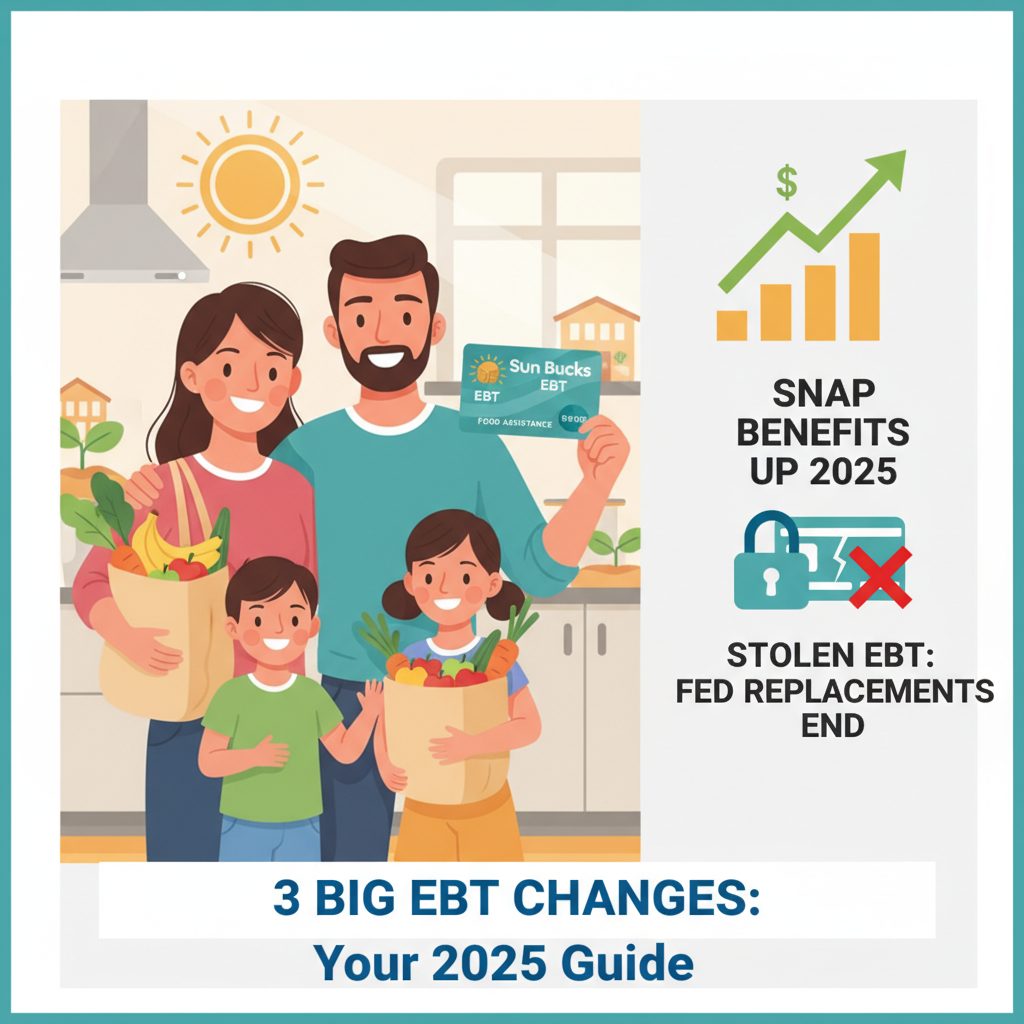
If you count on SNAP (Food Stamps) or help a loved one manage EBT, there are three developments this year that matter right away: 2025 benefit adjustments, the end of federal stolen-benefit replacements, and the expansion of summer nutrition support for kids. Below, we cut through the noise and explain what changed, why it matters, and how to take action today.
Key updates at a glance
- SNAP benefits increased for FY 2025. USDA’s annual cost-of-living adjustments (COLAs) took effect October 1, 2024. For households in Florida (part of the 48 contiguous states), the maximum monthly SNAP allotment for a family of four rose to $975, with other household sizes adjusted accordingly, and income standards/deductions updated for the year, per the federal memo to states from the Food and Nutrition Service (FNS) effective Oct. 1, 2024. See the policy notice: SNAP FY 2025 Cost-of-Living Adjustments USDA FNS.
- Federal replacement of stolen EBT benefits has sunset. Federal authority to replace benefits stolen by skimming/cloning covered thefts from Oct. 1, 2022 through Dec. 20, 2024. States can still process eligible claims for thefts that happened in that window if timely filed under their approved plans, but there is no federal authority to replace benefits stolen on or after Dec. 21, 2024. See the agency memo: SNAP – Sunset of Replacement of Stolen Benefits Plans USDA FNS and its underlying PDF memo dated Dec. 23, 2024 (FNS PDF).
- Summer EBT (SUN Bucks) is scaling nationally. USDA has stood up a permanent Summer EBT program—called SUN Bucks—to help children access food support when school is out. FNS maintains implementation resources and agency guidance, updated March 31, 2025, here: SUN Bucks (Summer EBT) Implementing Agency Resources USDA FNS. The National Governors Association’s program primer explains that USDA covers 100% of benefit costs, while states fund 50% of administrative costs and must submit an operations plan to USDA (NGA).
What the 2025 SNAP COLA means for your Florida household
USDA recalculates SNAP annually to keep pace—more or less—with food prices. For federal fiscal year 2025 (Oct. 1, 2024–Sep. 30, 2025), FNS raised:
- Maximum allotments (the most a household of your size could receive if you have very low net income)
- Gross and net income eligibility standards
- Key deductions (like the standard deduction)
According to the 2025 COLA memo to states, the maximum allotment for a family of four in the 48 states and DC is $975 per month this year, effective October 1, 2024 (USDA FNS). Florida is included in this 48‑state grouping. Other household sizes have specific maximums that also increased; your actual monthly benefit is still calculated based on your household size, countable income, and allowable deductions.
Action steps to keep your benefits right-sized
- If your food budget hasn’t budged since October 1, check your last notice or your state portal to confirm your allotment reflects the FY 2025 COLA. The federal memo made these changes effective automatically for states on October 1, 2024 (USDA FNS).
- Report changes that can increase your benefit. If your hours were cut or your rent, utilities, or out-of-pocket medical costs for seniors/people with disabilities increased, tell your SNAP agency. Those factors affect your net income and allowable deductions.
- Know that income standards and deductions were updated, too. If you were previously a little over income, the 2025 standards may help. See the official 2025 COLA notice for the policy basis and effective date (USDA FNS) and check your state eligibility screening tool.
Protect your EBT dollars: What changed on stolen-benefit replacements
Card skimming and cloning have hit EBT hard nationwide. Congress allowed states to use federal funds to replace SNAP benefits stolen via skimming/cloning from Oct. 1, 2022 through Sept. 30, 2024, and later extended that authority through Dec. 20, 2024 (USDA FNS; PDF memo dated Dec. 23, 2024: FNS PDF). Here’s what it means now:
- If your benefits were stolen between Oct. 1, 2022 and Dec. 20, 2024, you can still submit a claim to your state if you meet the plan’s requirements (deadlines, validation rules, and caps such as no more than two federal replacements in a federal fiscal year). FNS directed states to continue processing those eligible retroactive claims (USDA FNS).
- There is no federal authority to replace benefits stolen on or after Dec. 21, 2024. In other words, thefts occurring December 21, 2024 or later are not covered by the federal replacement program (USDA FNS).
- Security upgrades are coming. FNS highlighted to states in October 2024 that transitioning to chip-enabled EBT cards can help reduce fraud, drawing on successes from the debit/credit sector (USDA FNS).
Practical prevention tips you can use now
While state rollouts of enhanced EBT security are ongoing, these steps help reduce risk:
- Change your EBT PIN regularly—especially after using unfamiliar ATMs or point-of-sale terminals.
- Inspect card readers for skimmer overlays; if something looks loose or off, don’t use it.
- Shield the keypad when entering your PIN.
- Avoid sharing your card or PIN, and ignore unsolicited calls/texts asking for your PIN or card number.
If you do experience theft, report it to your SNAP agency immediately. Even if federal replacement funding no longer applies to new incidents, reporting helps investigators and may support future anti-fraud protections.
Summer 2025: What families should know about SUN Bucks (Summer EBT)
Summer breaks can stretch food budgets when school breakfasts and lunches pause. The new national Summer EBT program—called SUN Bucks—aims to close that gap. USDA’s FNS provides the program framework, technology guidance, and administrative funding details to states, territories, and tribal organizations. The implementing-agency resource hub (updated March 31, 2025) is here: USDA FNS SUN Bucks.
Key program basics from the National Governors Association primer:
- Benefit funding: USDA covers 100% of the benefit costs.
- Administration: States must cover 50% of administrative costs and submit an operations and management plan to USDA identifying roles for coordinating agencies (commonly school meal programs and SNAP agencies) (NGA).
What to do now
- Watch for state announcements on SUN Bucks eligibility, enrollment process, and issuance timeline for your family. FNS maintains national resources, while states set up operations and outreach (USDA FNS).
- If your child receives free or reduced-price school meals or participates in certain means-tested programs, you may be in the target group for Summer EBT. Monitor state education or SNAP agency updates as summer approaches.
Eligibility and enrollment pointers to avoid delays
Because the FY 2025 COLA also updated income standards and deductions, it’s worth rechecking where you stand if you were previously on the margin. While each state administers its own application and renewal process, the federal changes below are universal:
- Effective date: Oct. 1, 2024 for all FY 2025 adjustments (USDA FNS).
- What changed: Maximum allotments, income eligibility standards, and allowable deductions were all updated for FY 2025 (USDA FNS).
Steps you can take
- Gather complete documentation. Income verification (pay stubs or benefits letters), rent/mortgage, utilities, child support paid, and for seniors/people with disabilities, out-of-pocket medical expenses—these directly affect your SNAP budget.
- Recertify on time. Watch for your renewal window; late submissions can interrupt benefits even if you remain eligible.
- Report changes promptly. If you have reduced income or higher allowable expenses, telling your agency quickly can prevent under-issuance.
- Ask about deductions. The medical expense deduction for seniors/people with disabilities often goes underused; verify what counts and keep receipts.
Where to get help if you’re stuck
- USDA National Hunger Hotline. For referrals to local food resources and SNAP assistance, call the National Hunger Hotline referenced across FNS pages: 1-866-3-HUNGRY or 1-877-8-HAMBRE (hours and access may vary; see FNS pages such as the SUN Bucks resources for the hotline mention: USDA FNS).
- If you experienced EBT theft between Oct. 1, 2022 and Dec. 20, 2024 and haven’t filed a claim, review your state’s replacement plan rules to see if you still meet the timely filing and verification requirements. FNS’ memo clarifies that states can continue to accept and process those retroactive claims if they meet all plan requirements (USDA FNS).
Context: Why these changes happen annually
SNAP’s annual recalibration is embedded in federal law to reflect changes in food costs. Over time, adjustments to the Thrifty Food Plan and annual COLAs aim to maintain purchasing power for low-income households. For a broader view of why SNAP shifts with policy debates and inflation, see this overview in the American Journal of Public Health on SNAP’s history, politics, and public health role (AJPH via NCBI). While this is background reading rather than a how‑to, it explains why regular updates like the FY 2025 COLA are a feature of the program.
What we’re watching next
- State-level EBT chip card rollouts. FNS flagged chip card adoption as a priority anti-fraud measure; watch for your state’s timeline and card replacement communications (USDA FNS).
- Summer EBT operational details. As states finalize operations plans, expect clarity on which families are automatically eligible versus need to apply, benefit issuance schedules, and how benefits are delivered (USDA FNS; NGA).
- Continued inflation